chicken
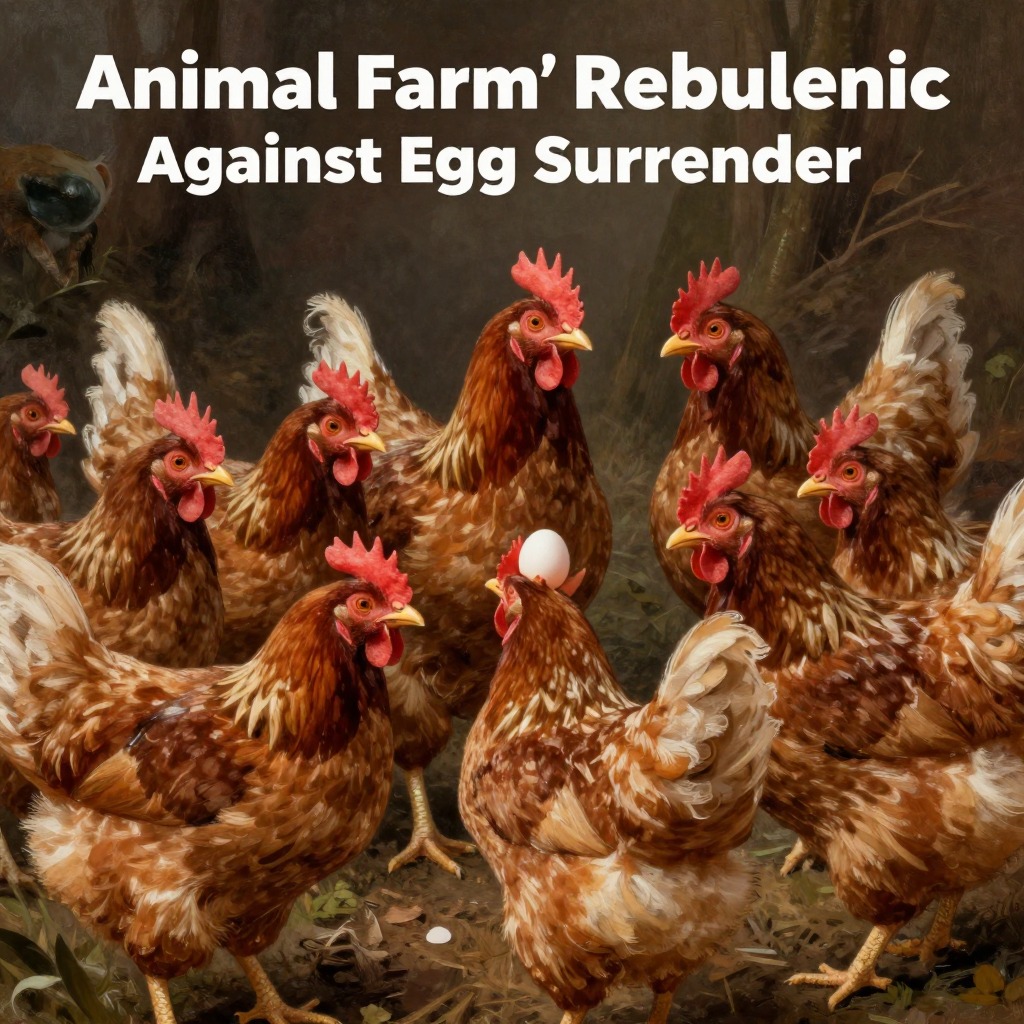
The chickens of Animal Farm are among the most exploited and voiceless members of the animal community, their bodies and labor systematically appropriated by the ruling pigs. From the earliest days of the Rebellion, the hens are expected to contribute their eggs to the collective good, but as Napoleon's dictatorship consolidates, this contribution becomes a compulsory sacrifice enforced by starvation and death. Their brief, desperate rebellion marks the first open resistance to the new order and is met with a ruthlessness that foreshadows the later purges.
Role in the Farm Economy
Under the human regime of Mr. Jones, the hens' eggs were sold at market to bring in money for their master, a fact Old Major cites in his revolutionary speech as a prime example of human exploitation. After the Rebellion, the pigs initially claim the windfall apples and milk for themselves, but the hens' eggs remain a farm resource. As the farm's financial needs grow, Napoleon announces through Squealer that the hens must surrender their eggs to meet a contract for four hundred eggs a week with Mr. Whymper, the human intermediary. The price of these eggs, Napoleon explains, will pay for enough grain and meal to keep the farm going until summer. The hens are told to welcome this sacrifice as their own special contribution toward building the windmill, a framing that casts their forced labor as voluntary patriotism.
The Hens' Rebellion
When the hens hear the order to surrender their eggs, they raise a terrible outcry. They had been warned earlier that this sacrifice might be necessary but had not believed it would really happen. Just as they were getting their clutches ready for the spring sitting, they protest that to take the eggs away now is murder. For the first time since the expulsion of Jones, there is something resembling a rebellion. Led by three young Black Minorca pullets, the hens make a determined effort to thwart Napoleon's wishes by flying up to the rafters and laying their eggs there, so that the eggs smash to pieces on the floor. This act of sabotage is a direct challenge to the pigs' authority, using their own bodies as the site of resistance.
Brutal Suppression
Napoleon acts swiftly and ruthlessly. He orders the hens' rations to be stopped entirely and decrees that any animal giving so much as a grain of corn to a hen shall be punished by death. The dogs see to it that these orders are carried out. For five days the hens hold out, starving but refusing to lay in the nesting boxes. Then they capitulate and go back to their nesting boxes. Nine hens have died in the meantime. Their bodies are buried in the orchard, and it is given out that they died of coccidiosis, a lie that conceals the true cause of death from the outside world. Mr. Whymper hears nothing of this affair, and the eggs are duly delivered, a grocer's van driving up to the farm once a week to take them away. The rebellion is erased from official memory, but the hens' sacrifice is not forgotten by the other animals.
Legacy and Continued Exploitation
The hens' failed rebellion does not improve their condition; it only tightens the pigs' control. The contract for eggs is later increased to six hundred a week, so that the hens barely hatch enough chicks to keep their numbers at the same level. Their eggs remain a commodity to be traded for the pigs' benefit, and their lives are reduced to a cycle of production and deprivation. The three young Black Minorca pullets who led the rebellion are later among those executed in the great purge, when Napoleon's dogs tear the throats out of animals who confess to being in league with Snowball. The hens' brief defiance becomes a cautionary tale, demonstrating that any challenge to the pigs' authority will be met with lethal force. Yet their act of resistance remains the only collective uprising against Napoleon's rule, a moment when the most powerless creatures on the farm dared to say no.